How to Build an Author Platform

Your author platform is the foundation for your career as a writer. It allows you to build and sustain connections with your audience, making book marketing smoother and more effective. With a strong platform, you create ongoing engagement, making it easier to market books when they’re ready while opening doors to opportunities like media features, speaking engagements, and collaborations.
Can you publish a book without an author platform? Technically, yes. But attracting readers, selling books, and growing your career is significantly harder without one. A well-established platform ensures you’re not just launching a book into the void but rather into the hands of readers who are already invested in you.
What’s the Difference Between Author Platform Building and Book Marketing?
Many writers confuse an author platform with book marketing, but they serve different purposes.
Author Platform: A long-term strategy that builds your visibility, credibility, and audience. It includes social media engagement, blogging, networking, public speaking, and overall presence.
Book Marketing: Short-term strategies that focus on promoting a specific book, such as launch campaigns, advertisements, promotions, and book signings.
Building an author platform ensures that when the time comes to market your book, you have a ready-made audience eager to support you.
For more on this, read our blog What’s the Difference Between Author Marketing and Book Marketing?
How Do You Build an Author Platform?
Building a platform is different for every author. Your approach depends on your genre, audience, and personal strengths. Below are four key steps to developing a strong and sustainable author platform.
Step 1: Clarify Your Author Identity
Before you start building your platform, you need to know who you are as an author. Your identity should be clear, consistent, and authentic.
Author Identity Exercise:
What are your core values as a writer?
What themes do you explore in your writing?
How do you want to be perceived in the literary world?
What is your unique writing voice?
Example Author Identity Statement: “I write contemporary fantasy that explores themes of resilience, identity, and power. My work is deeply character-driven, blending magic with real-world issues. I want to build a community of readers who love immersive storytelling with strong female protagonists.”
Knowing this will help shape everything else—your branding, content, and reader engagement strategies. For more assistance on this, download our FREE workbook, Crafting Your Author Identity: Defining Your Voice and Connecting Authentically with Readers.
Step 2: Identify Your Ideal Reader
Understanding your ideal reader helps you tailor your platform to attract and engage them effectively.
Ideal Reader Exercise:
Who would enjoy your books the most?
What are their interests, values, and reading habits?
Where do they spend their time online?
What problems or desires do your books fulfill for them?
Example: “My ideal reader is a woman in her late 20s to early 40s who loves atmospheric fantasy novels with strong heroines. She enjoys folklore, feminist themes, and books like those by V.E. Schwab or Naomi Novik. She is active on Instagram, follows book influencers, and participates in online book clubs.”
Once you know your reader, you can strategically choose where and how to engage with them.

Step 3: Strategize & Set Goals
This step ensures that your efforts are intentional and sustainable. Instead of spreading yourself thin across multiple platforms, focus on a few key channels that align with your strengths and audience.
Choose Your Core Channels
Select 2-3 main platforms that best suit your audience and communication style. This might include:
A professional website with a blog to showcase your expertise and provide valuable content.
Social media (Instagram, Twitter, TikTok, etc.), where your audience engages the most.
Email marketing, which offers direct, personal connections with readers.
Speaking engagements, podcasts, and events, if in-person networking aligns with your strengths.
Example of a Core Channel Plan:
Primary Website: Features a blog where I share writing insights, book updates, and behind-the-scenes content.
Instagram: Engages readers with bookish content, reels, and interactive stories.
Email Newsletter: Offers exclusive content, early book updates, and personal reflections.
Set Measurable Goals
Goals keep you focused and allow you to track progress. Set SMART (Specific, Measurable, Achievable, Relevant, Time-bound) goals.
Example Goals:
Grow my email list to 300 subscribers in six months.
Post one blog per month to establish consistency.
Increase Instagram engagement by 20% in three months.
Pitch to three podcasts within the next quarter.
By focusing on these goals, you’ll build momentum and a thriving author presence.
Step 4: Leverage SEO to Boost Visibility
Search Engine Optimization (SEO) helps potential readers find you organically through search engines like Google. SEO is especially important for your website and blog, ensuring that people searching for your topics or book themes can discover your work.
SEO Basics for Authors
Keyword Research: Identify key terms your ideal readers search for (e.g., “best fantasy books with strong female leads” or “how to write a thriller”).
Optimize Website Content: Naturally integrate keywords into your blog posts, bio, and book descriptions.
Create Quality Blog Content: Regularly publish useful articles, such as writing advice, book reviews, or behind-the-scenes insights.
Use Metadata: Optimize your website’s title tags, meta descriptions, and images for search engines.
Backlinking: Link to and from reputable sources, guest blogs, or collaborate with fellow authors.
SEO Lesson: Writing a Keyword-Optimized Blog Post
Let’s say you’re writing a blog post titled “How to Write a Suspenseful Thriller.” Your goal is to ensure it reaches aspiring thriller writers searching for advice.
Research Keywords: Find what people are searching for (e.g., “thriller writing tips” or “how to create suspense in a novel”).
Use Keywords Naturally: Incorporate them into the title, subheadings, and throughout the post without overstuffing.
Provide Value: Offer actionable steps, examples, and personal insights.
Include Internal & External Links: Link to other helpful content on your site and reputable external sources.
Optimize for Readability: Use short paragraphs, bullet points, and engaging headings to keep readers interested.
Example: Instead of writing “Thrillers need suspense,” you could say, “One of the key elements of a thriller is tension. Readers should always feel like something big is about to happen. One way to do this is by ending each chapter with a question or revelation that compels the reader to turn the page.”
By integrating SEO, your website and content will work for you over time, drawing in new readers even when you’re not actively promoting your work.
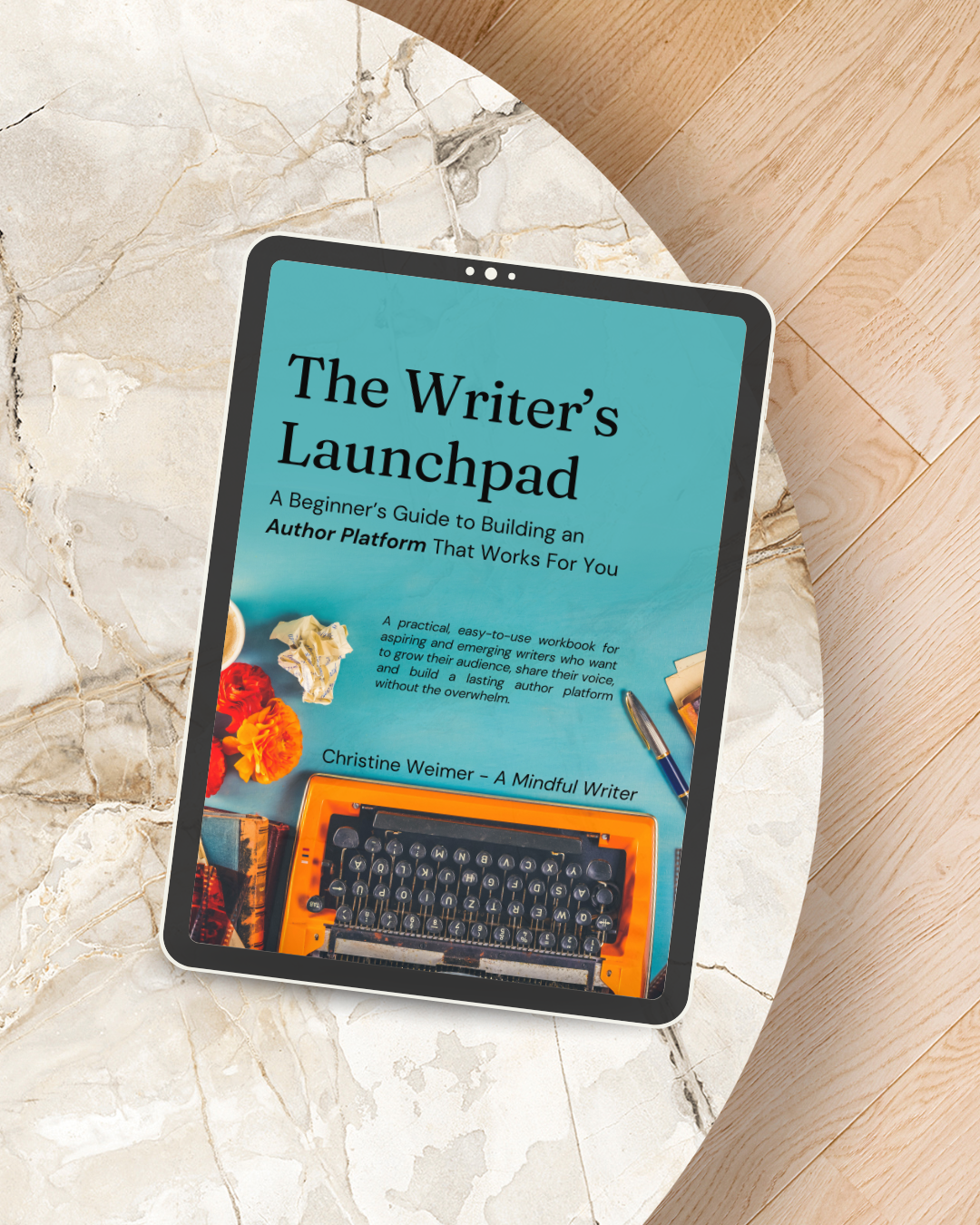
Step 5: Download The Writer’s Launchpad for a Beginner’s Guide to Building an Author Platform That Works For You
The Writer’s Launchpad is a workbook that’s here to help you cut through the BS of what it means to have a “platform” and build something real. Something sustainable. Something that grows with you, not something you build once and abandon.
This isn’t about chasing trends or going viral. It’s about showing up with your voice, your story, and your energy on your terms.
Inside, you’ll get:
12 deep-dive lessons on key areas of platform-building (think: identity, readers, website, blogging, lead magnets, email, SEO, social media, submissions, PR, and more)
Guided prompts, action steps, and reflection exercises to turn ideas into actual progress
A final planning worksheet to map out your next 90 days (so you’re not just learning, but doing)
Suggested reading and affirmations for each chapter, because this journey is as much about mindset as it is about strategy
This workbook isn’t a step-by-step “this is the only way” manual. It’s a resource to help you zoom out, explore all the possibilities, and figure out what feels right for you.
Some lessons will light you up and feel like a full-body YES. Others might be more of a hmm, maybe later. That’s exactly the point. You get to choose what to focus on, when to dive in, and how to build a platform that fits your voice, your goals, and your life.
Whether you’re just starting to dream of publishing, have a finished manuscript, or are already a published author feeling like your platform is a little… wobbly… this workbook will meet you where you are.
Ready to Build a Platform That Actually Feels Like You?
You’re a writer. You’ve got words on the page, a story you care about, maybe even a whole book under your belt. But when it comes to getting your work out there—to finding readers, building your audience, growing your presence in the literary world—it can feel like a giant black hole of “shoulds,” algorithms, and overwhelming advice that doesn’t seem made for you.
You’ve heard you need a platform. You’ve seen the authors with big followings, the “rules” about social media, the pressure to do all the things. But no one ever sat you down and explained what an author platform really is, why it matters, or how to build one that feels aligned with your writing life.
That’s why I created The Writer’s Launchpad, a workbook that’s here to help you cut through the BS of what it means to have a “platform” and build something real. Something sustainable. Something that grows with you, not something you build once and abandon.
This isn’t about chasing trends or going viral. It’s about showing up with your voice, your story, and your energy on your terms.
Inside, you’ll get:
12 deep-dive lessons on key areas of platform-building (think: identity, readers, website, blogging, lead magnets, email, SEO, social media, submissions, PR, and more)
Guided prompts, action steps, and reflection exercises to turn ideas into actual progress
A final planning worksheet to map out your next 90 days (so you’re not just learning, but doing)
Suggested reading and affirmations for each chapter, because this journey is as much about mindset as it is about strategy
This workbook isn’t a step-by-step “this is the only way” manual. It’s a resource to help you zoom out, explore all the possibilities, and figure out what feels right for you.
Some lessons will light you up and feel like a full-body YES. Others might be more of a hmm, maybe later. That’s exactly the point. You get to choose what to focus on, when to dive in, and how to build a platform that fits your voice, your goals, and your life.
Whether you’re just starting to dream of publishing, have a finished manuscript, or are already a published author feeling like your platform is a little… wobbly… this workbook will meet you where you are.
Who It’s For:
This guide is for writers who are ready to:
Stop overthinking and start taking aligned action
Build a platform that’s sustainable, not stressful
Create a community around their work, not just a following
Share their voice with confidence (even if they’re not “good at marketing”)
What Writers Are Saying:
“This workbook helped me realize platform-building doesn’t have to feel gross. It feels like I’m creating something instead of just trying to sell.”
“Christine’s approach is so real and down-to-earth. I finally feel like I have a roadmap that makes sense.”
Your platform doesn’t have to be perfect. It just has to be yours. Let The Writer’s Launchpad help you build it, one intentional step at a time.
Pages: 57
Remember: Your author platform isn’t something you build overnight. It’s an evolving, ongoing process. Start with authenticity, be strategic with your choices, and remain consistent. Focus on building relationships, providing value, and showing up as the writer you truly are. Over time, your efforts will compound, creating a sustainable platform that supports your books, career, and readers for years to come.